
How Geopolitical Conflict Is Reshaping the Global Economy: Analysis & Asset Impact Report

The Macro Picture: Mechanics of War-Driven Economic Shock
When military conflicts escalate, the global economy faces three immediate shocks: energy price spikes, supply chain fracturing, and capital flight to safety.
┌─────────────────┐      ┌──────────────────────────┐      ┌─────────────────────────┐
│ Military        │ ───► │ Supply Chain Disruptions │ ───► │ Cost-Push Inflation     │
│ Escalation      │      │ & Energy Bottlenecks     │      │ & Rate Hikes            │
└─────────────────┘      └──────────────────────────┘      └─────────────────────────┘
                                                                        │
                                                                        ▼
┌─────────────────┐      ┌──────────────────────────┐      ┌─────────────────────────┐
│ "Dead Money"    │ ◄─── │ Reduced Corporate Margins│ ◄─── │ Demand Destruction      │
│ Trap            │      │ & Asset Devaluation      │      │ & Consumer De-leveraging│
└─────────────────┘      └──────────────────────────┘      └─────────────────────────┘
Supply Chain & Commodity Bottlenecks: Chokepoints such as the Red Sea, the Strait of Hormuz, and Eastern European transit corridors face shipping diversions, maritime blockades, and soaring freight rates. Primary commodities—crude oil, natural gas, wheat, fertilizer, and semiconductor precursor gases—experience price volatility, passing cost-push inflation onto global markets.
Monetary Policy Traps: Central banks face a difficult balance. Escalating energy costs push headline inflation above targets, limiting room for monetary easing even as GDP growth slows. Interest rates remain elevated for longer, increasing borrowing costs for corporations and sovereign debtors.
Budgetary Diversions: Sovereign balance sheets shift away from productive infrastructure, trade development, and social welfare toward defense spending, expanding budget deficits and increasing national debt loads.
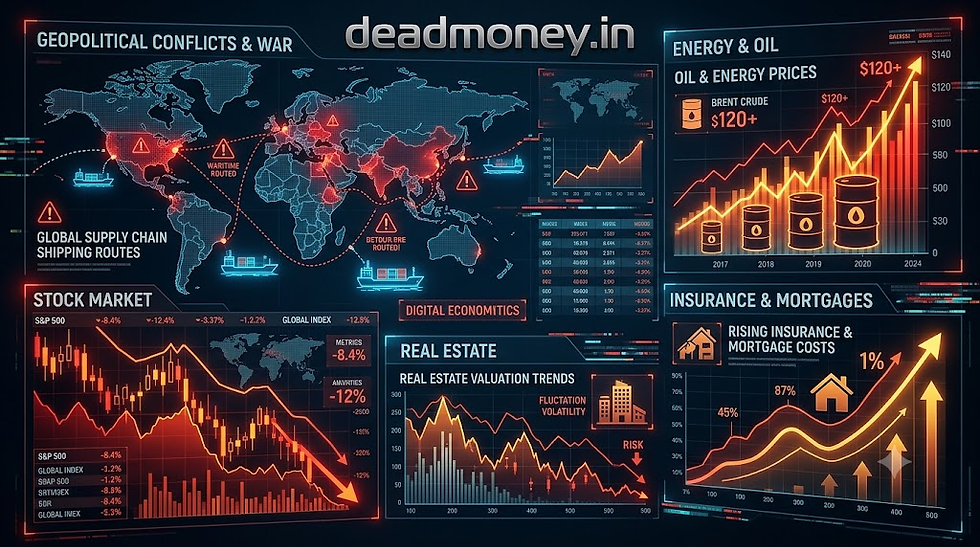
📊 Dashboard: Global Financial Asset Classes Under War Scenarios
Asset Class | Immediate Impact | Medium-to-Long-Term After effects | Risk Category | Portfolio Strategy |
Stock Markets (Equities) | Acute volatility; sharp drawdowns in broad indices (S&P 500, Nifty 50, Nikkei). Defense and Energy sectors surge. | Market concentration increases around mega-cap balance sheets. Non-energy corporate earnings margins compress. | High | Rotational shift toward value, high free cash flow, and defense/aerospace. |
Insurance Prices (Risk) | Immediate rate spikes in marine war risk, air aviation cargo, and regional property coverage. | Structural baseline increase in global reinsurance premiums; widespread coverage exclusions in conflict-adjacent zones. | Severe | Escalating operational overhead; requires proactive risk transfer structures. |
Mutual Funds & ETFs | NAV erosion in broad-market funds. Large capital outflows from Emerging Market (EM) equities toward US Dollar assets. | High divergence in sector fund returns; passive indexing suffers prolonged stagnation ("dead periods"). | Medium-High | Transition from passive indexing to tactical sector allocation and defensive hybrid funds. |
Real Estate & Property | Commercial property deals slow due to rising financing costs. Capital flees geographic conflict zones. | Residential real estate in safe-haven regions (e.g., UAE, US, West Europe) surges, while regional debt costs drag down leveraged developers. | Medium | Focus on non-leveraged residential assets in neutral jurisdictions; avoid speculative commercial developments. |
Deep-Dive: Sectoral Disruptions and Long-Term Aftereffects
1. Stock Markets: Volatility, Divergence, and Equity Compression
Geopolitical crises trigger initial equity sell-offs driven by risk reduction. However, performance quickly diverges across sectors:
Defense & Aerospace: Defense contractors experience sustained revenue growth as governments raise military spending.
Energy & Commodities: Oil majors and commodity exporters benefit from war-risk premiums embedded in spot prices.
Airlines, Automotive, & Consumer Discretionary: High jet fuel prices, elevated input costs, and declining consumer sentiment compress profit margins.
For retail investors, static holdings in broad indices can enter multi-year horizontal patterns, where nominal prices stall and inflation erodes real purchasing power.
2. Insurance Markets: Rising Premiums and Coverage Exclusions
The global insurance and reinsurance industry absorbs significant claims during geopolitical conflicts, impacting marine, aviation, supply chain, and trade credit sector pricing:
War-Risk Marine Insurance: Hull and machinery insurance rates for ships entering contested sea lanes surge significantly, directly increasing the cost of sea freight.
Property & Casualty (P&C) Reinsurance: Reinsurers raise baseline capital requirements globally to cover expanded tail-risk models, driving up premiums for domestic real estate and commercial insurance.
Trade Credit Insurance: Coverage limits for international cross-border trades shrink, restricting trade finance for mid-sized import-export businesses.
3. Mutual Funds & Asset Allocation
Mutual fund flows reveal clear shifts in investor sentiment during geopolitical crises:
Emerging Market Debt & Equity Outflows: Higher global interest rates and a strong US Dollar trigger capital flight from emerging markets, putting pressure on local currencies.
Debt Mutual Funds & Yield Adjustments: Sovereign bond yields face upward pressure from inflation risks. High-duration debt funds incur mark-to-market losses, making short-duration debt and cash equivalents preferred capital preservation tools.
Commodity & Gold Funds: Systematic inflows into physical gold ETFs and commodity funds reflect standard safe-haven positioning during market volatility.
4. Property & Real Estate: Geographic Divergence and Cost Shocks
Real estate markets undergo severe bifurcations based on geographic proximity and debt structure:
Construction Material Inflation: Cement, steel, aluminum, and glass face supply chain delays, extending project completion timelines and narrowing profit margins for developers.
Higher Mortgage Rates: Elevated central bank rates increase mortgage payments, slowing transaction volumes in key residential markets.
Safe-Haven Real Estate Hubs: International capital concentrates in politically neutral financial centers (e.g., Dubai, Singapore, Switzerland), driving up prime residential rents and asset valuations while primary conflict regions suffer severe capital flight.
The DeadMoney.in Takeaway: How to Avoid Trapped Capital During Global Crises
When geopolitical conflicts disrupt global markets, traditional portfolio strategies risk stagnating—turning active investments into Dead Money that fails to outpace inflation.
                     GEOPOLITICAL PORTFOLIO ADJUSTMENT

   TRADITIONAL PORTFOLIO (High Risk)      TACTICAL RESILIENT PORTFOLIO
  ┌──────────────────────────────────┐   ┌──────────────────────────────────┐
  │ 70% Passive Equity Indexing      │   │ 40% Core High Cash-Flow Equities │
  │ 20% Unhedged Long-Term Debt      │ ──► 20% Short-Duration Debt / Yield  │
  │ 10% Illiquid Commercial Property │   │ 20% Commodities, Gold & Energy   │
  └──────────────────────────────────┘   │ 20% Liquid Cash / Opportunistic  │
                                         └──────────────────────────────────┘
Conduct an Opportunity Cost Audit: Review underperforming mutual funds and non-dividend equities that have lagged benchmark indices over 4–8 consecutive quarters. Reallocate capital toward assets with pricing power and strong cash generation.
Factor Insurance and Freight Into Margins: If you hold equity positions in supply-chain-dependent companies, verify that their operating margins can absorb higher freight costs and insurance premiums.
Diversify Sovereign and Currency Exposure: Reduce home-country bias by holding assets denominated in multiple reserve currencies, backed by hard commodities like gold and crude oil.
Maintain Tactical Liquidity: Avoid committing all capital to illiquid real estate during high-rate regimes. Keep a cash reserve to deploy during market pullbacks.
Publisher Note for DeadMoney.in:
In investment parlance, "Dead Money" describes capital stuck in assets yielding zero or negative real returns over extended horizons. In times of war and acute geopolitical friction, static cash and unhedged traditional portfolios face severe value decay due to inflation surges, premium spikes, and currency devaluation. This article breaks down the mechanics of global economic disruptions and highlights strategies to unlock trapped liquidity.


Comments